From the very beginning, journalists asked the questions the authorities refused to answer. Over more than two decades, Kenneth Ehigiene’s case has been covered by Dutch national newspapers, television, and the international press. Below is a selection of that coverage.
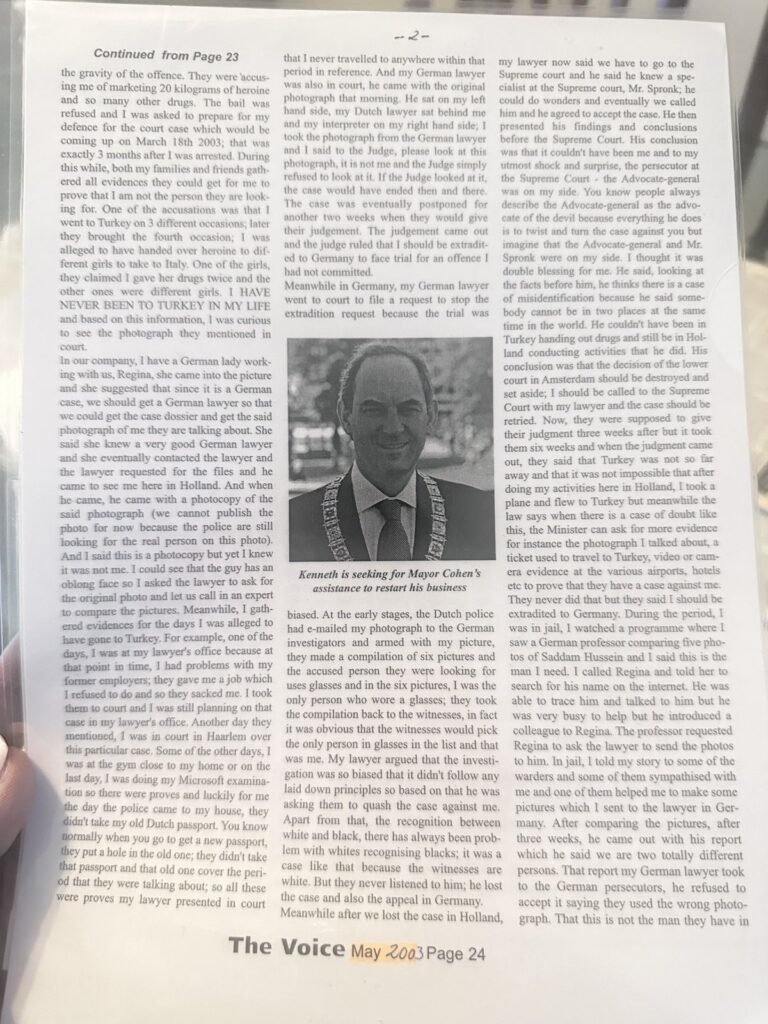
The Voice — May 2003
One of the very first interviews, given while Kenneth was still fighting the case. He recounts how the German investigators built their identification on a compilation of six photographs in which he was the only man wearing glasses — the same glasses the witnesses were told to look for. It was also the moment science entered the case: after seeing a German professor compare photographs on television, Kenneth had the expert contacted from prison. After three weeks of analysis, the professor’s report concluded that Kenneth and the wanted man were two totally different persons. The German prosecutor refused to accept it.
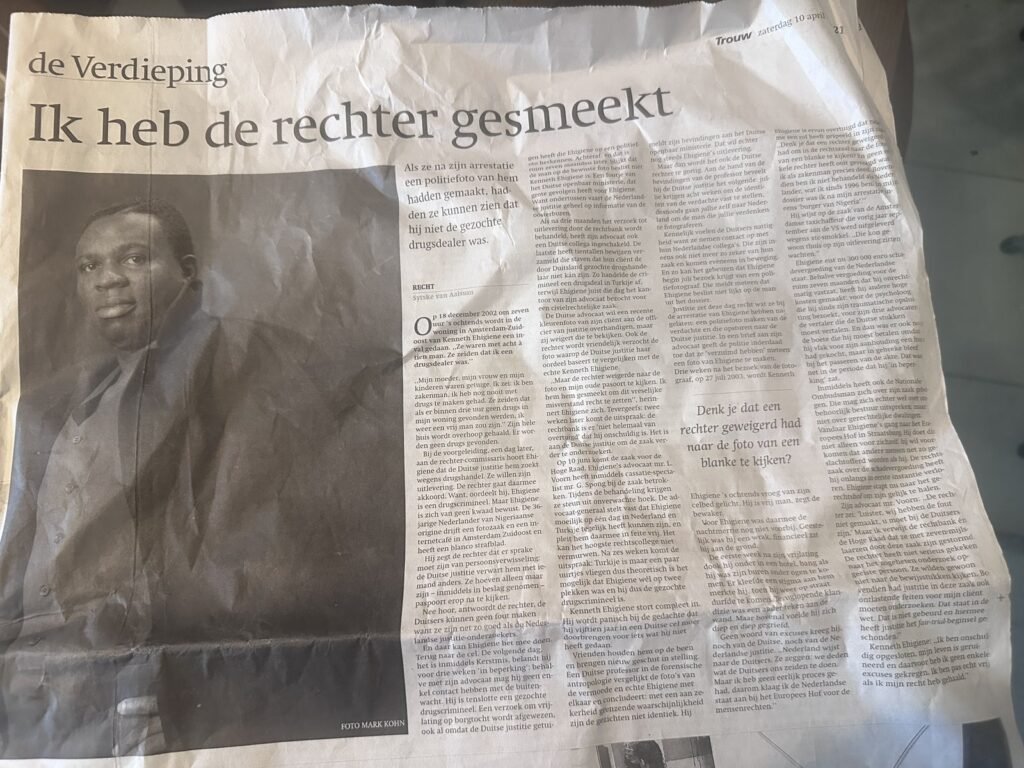
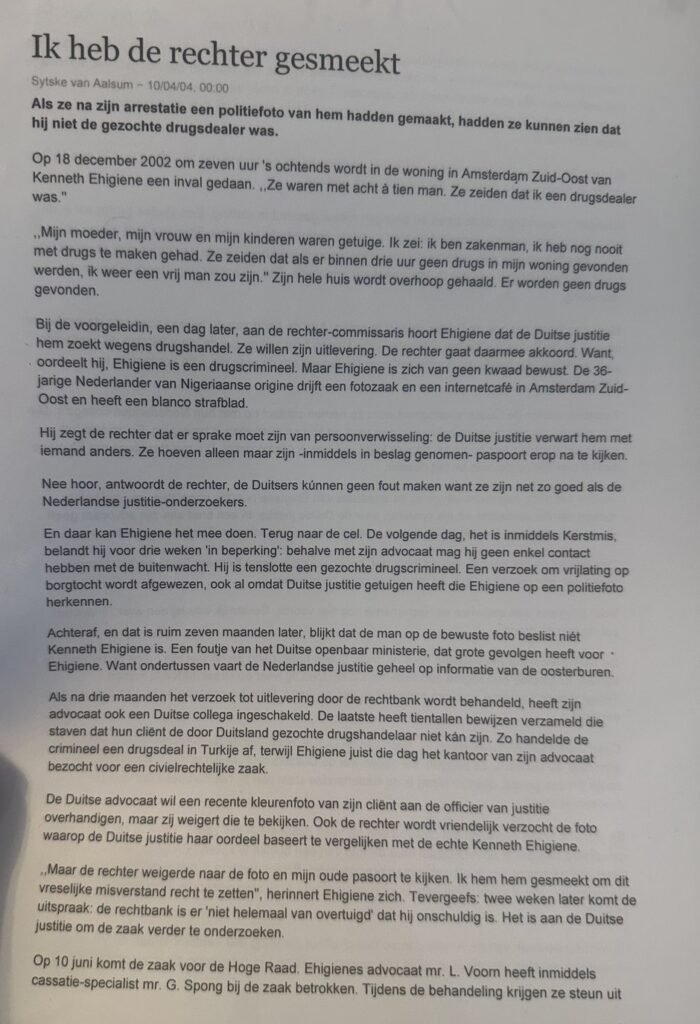
Trouw — “Ik heb de rechter gesmeekt” — 10 April 2004
“I begged the judge.” Journalist Sytske van Aalsum reconstructs the full nightmare: the raid of 18 December 2002, when eight to ten officers stormed the home of a businessman with a spotless record; the judge who refused to look at the photograph or the passport that would have cleared him; and the ruling that Turkey was “only a few hours’ flight away,” so he could theoretically have been in two places. When police photographs were finally taken after more than seven months in the Bijlmer prison, the mistake was undeniable. As the article notes: if that photo had been taken on day one, the error would have been discovered immediately.
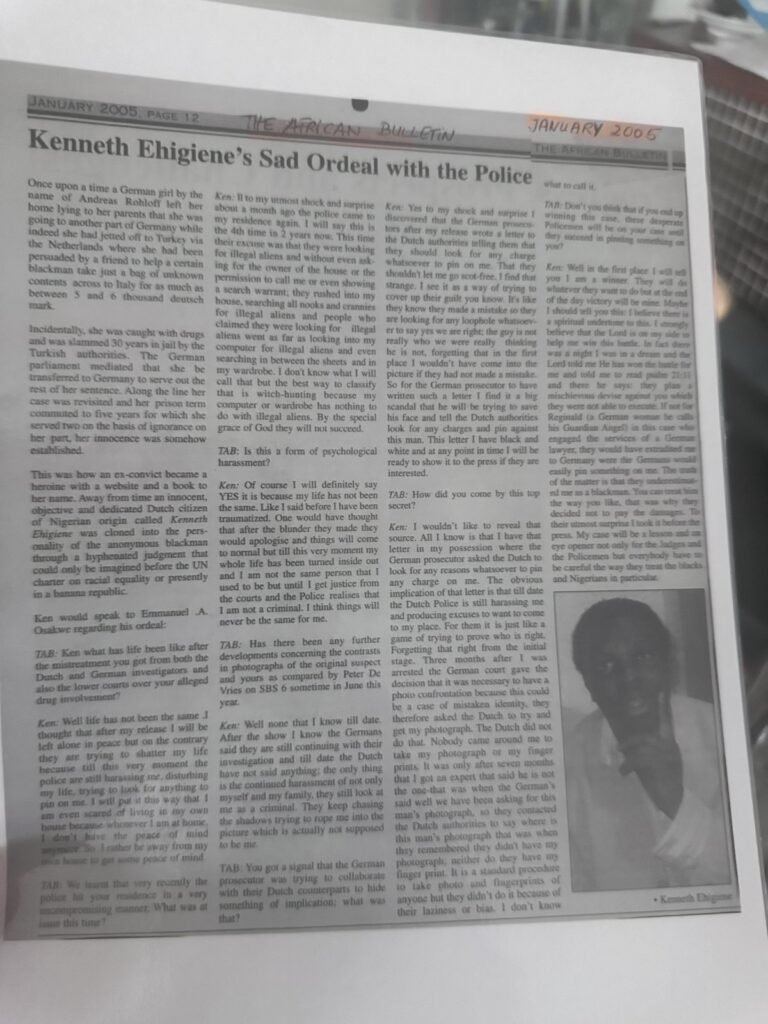
The African Bulletin — January 2005
Eighteen months after his release, the ordeal had not ended. In this interview Kenneth describes the fourth police raid on his home in two years — officers searching his computer and even between his bedsheets, supposedly “looking for illegal aliens,” without a warrant. He also reveals a letter in his possession in which the German prosecutor asked the Dutch authorities to find any charge to pin on him rather than let him go “scot-free.” His conclusion was defiant: “My case will be a lesson and an eye-opener not only for the judges and the policemen, but for everybody.”
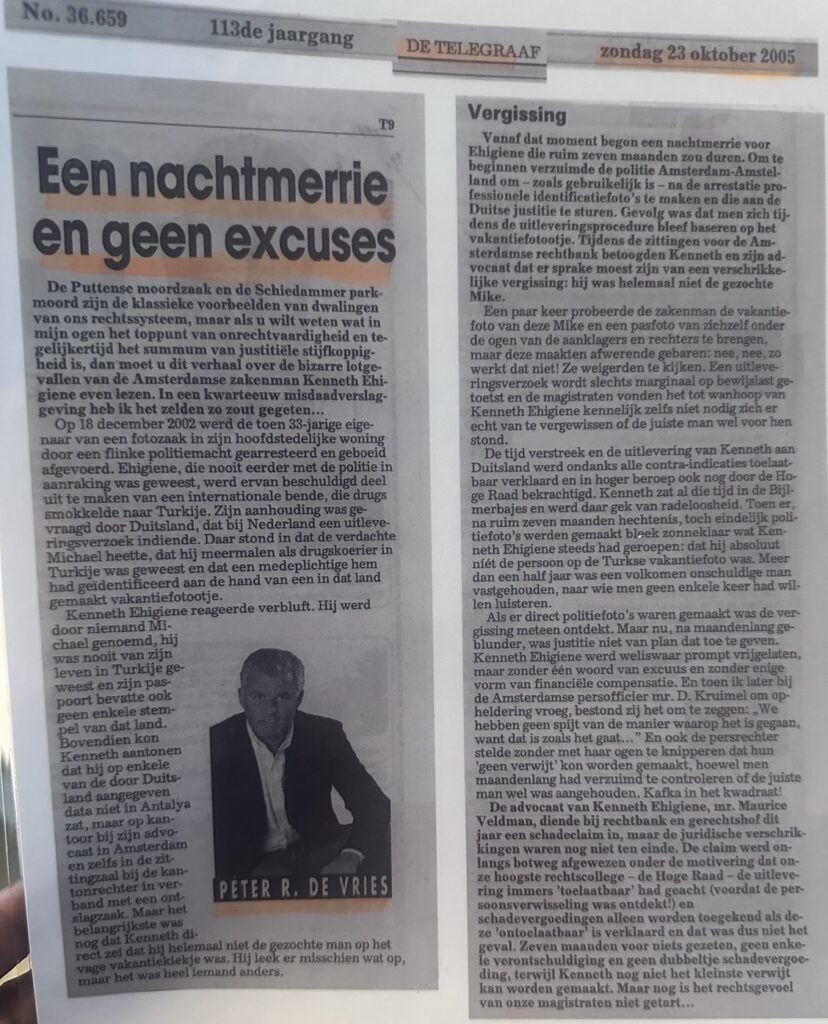
De Telegraaf — “Een nachtmerrie en geen excuses” — 23 October 2005
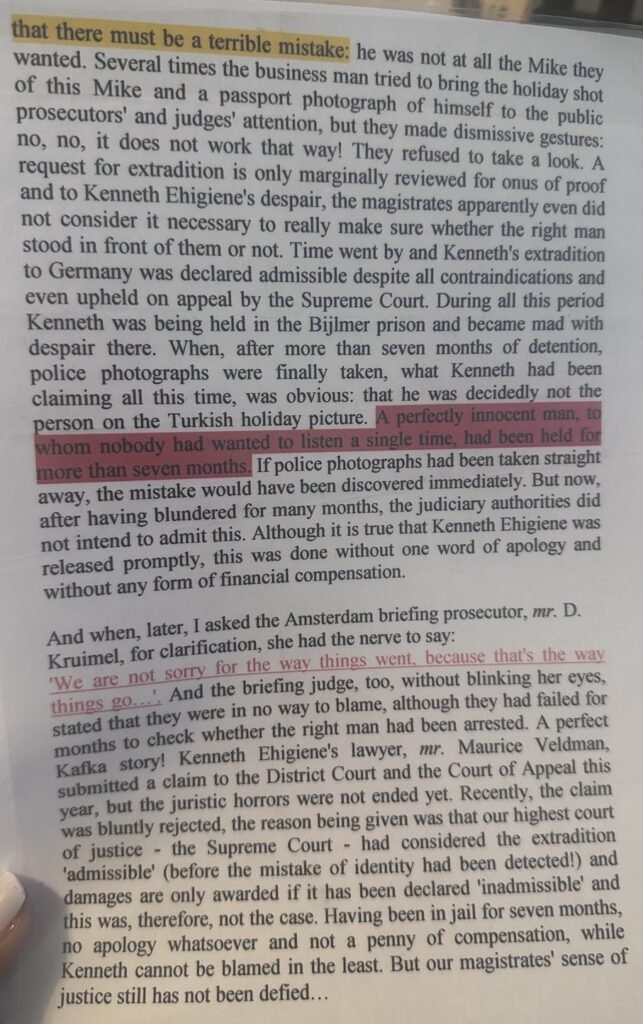
A nightmare and no apology.” Renowned crime journalist Peter R. de Vries devoted his column in De Telegraaf to the case, calling it the height of injustice and judicial stubbornness he had encountered in twenty-five years of crime reporting. As he wrote: “A perfectly innocent man, to whom nobody had wanted to listen a single time, had been held for more than seven months.” When the Amsterdam press officer was asked for clarification, her answer was: “We are not sorry for the way things went, because that’s the way things go…
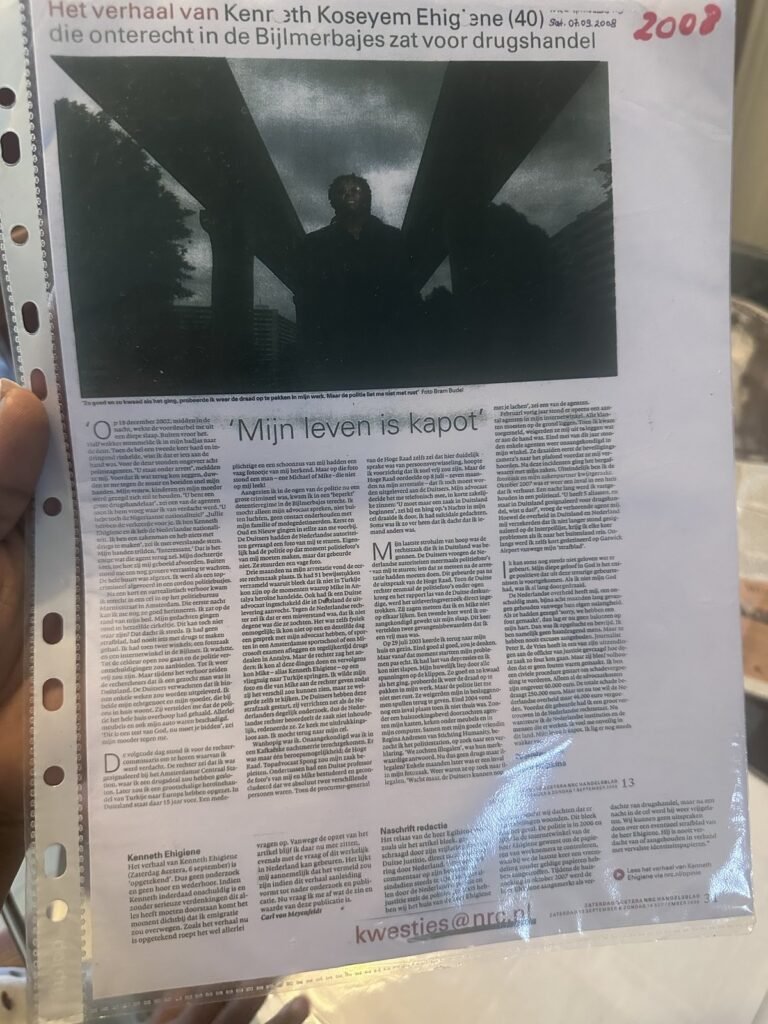
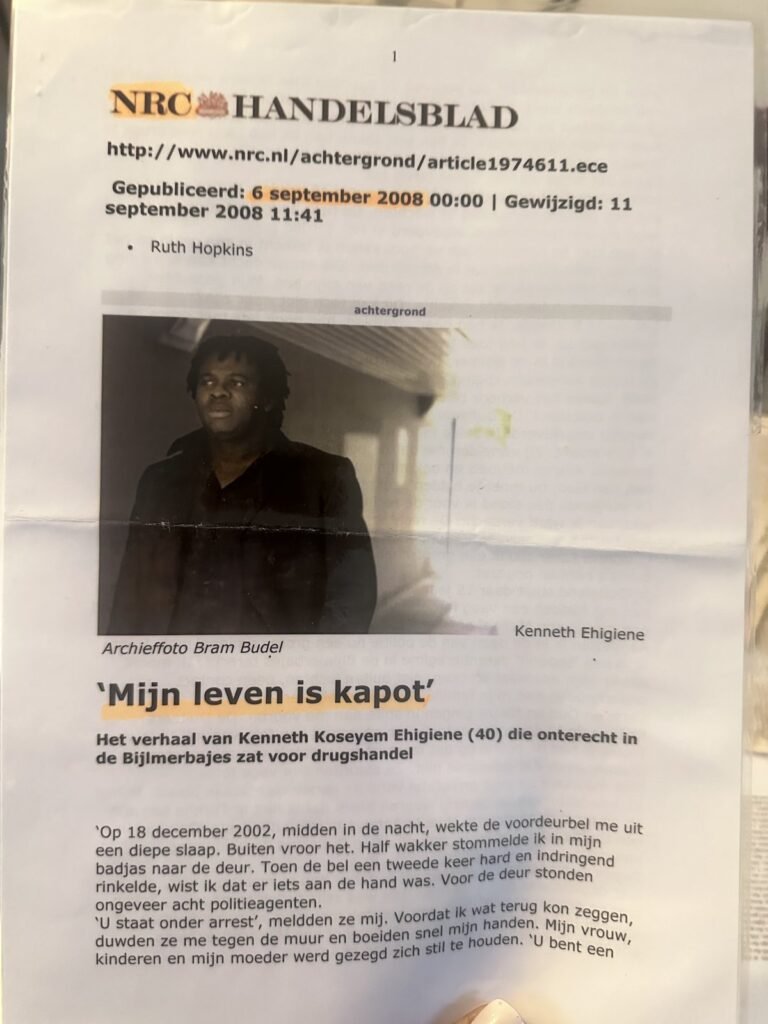
NRC Handelsblad — “Mijn leven is kapot” — 6 September 2008
“My life is broken.” Five years on, journalist Ruth Hopkins documented what the mistake had cost: the photo shop and business partner lost, the depression and sleepless nights, the repeated raids that continued as late as 2007, and even a brief detention at Gatwick Airport because of a “criminal record” that should never have existed. The Dutch state had been asked for €250,000 in damages — the legal costs alone were €60,000 — yet offered only €46,000. No apology was ever given. As Kenneth put it: “If they had said ‘sorry, we made a mistake,’ there would be no brick on my heart.”